
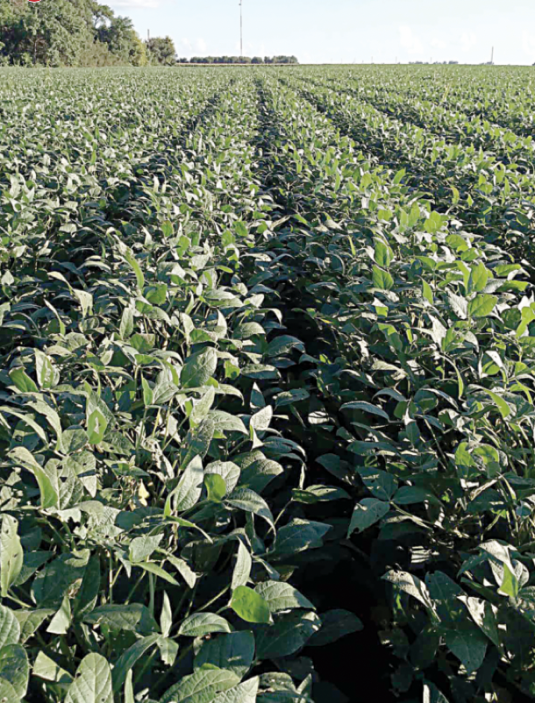
CROP REPORT - Soybeans enjoying late-July growing conditions.
Cropping season 2024: a perspective
April precipitation could push back planting dates; increased temperatures expected
April precipitation could push back planting dates; increased temperatures expected
Thu, 04/25/2024 - 1:30am
The 2023 cropping season left almost everyone waiting for the other shoe to drop. Prices softened into harvest, although welcome rains fell in September after the crop was mature as well as in October unlike the two previous seasons. We’ll get out our crystal ball and tea leaves again to offer some insight for the cropping year.
We’re coming off one of the more bizarre winters ever. With El Niño firmly entrenched, snow fall was sparse, and temperatures were extremely moderate. Some welcome rain fell in December, with most picking up 1” – 2” after a brown Christmas. Total snowfall measured about 17” at the ranch and 14.6” in New Richland. Normal seasonal snowfall at the SROC is 52.3”. Despite the light snowfall total, the frost depth was very shallow, allowing much of that moisture to percolate into the soil. Moving snow was a novelty. Many snowblowers were never attached to tractors, let alone operated. Translation: Look out for next winter.
Warm temperatures in March allowed anhydrous to be applied. More fence lines and groves were cleaned out than in any winter in recent memory. April precip has been substantial but not excessive to this point. Warm days allowed some corn planting to begin from the 12th – 14th. There are tales of the odd soybean field being planted. Not so surprisingly, after last year’s heavy May rains that resulted in nearly a quarter of the corn acres being replanted, many have taken a go-slow approach. Trust but verify.
If we continue to receive April precipitation, it could push planting dates back. The warmer weather we experienced earlier has been tempered by more seasonal temps as of late. Much of the corn was planted last year in the first week of May. Much of the replant corn was planted in late May. Given the drier than normal and above normal GDU growing season we had, the corn crop in particular was nothing short of amazing for most. April precip as of the 22nd has been generous but not excessive with 3.51” in New Richland, 2.6” at the ranch and 3.02” at the SROC in Waseca. Normal for the entire month of April at the SROC is 3.3”.
What do the growing season temperatures and precipitation outlooks look like? Released April 18th, NOAA’s 30-day May outlook for our area shows a 40 – 50% chance of above normal temperatures with even odds of above or below normal precipitation. Also released on April 18th, NOAA’s 90-day outlook (April through June) for is calling for 33 - 40% increased odds of above normal temps. On the precipitation side, it’s calling for even chances of above or below normal precipitation. Our soil moisture is in much better shape than last year. Tile lines are running, and the soil profile is full in many places. We should be transitioning into an ENSO-neutral period (85% chance) for April – June with a La Niña event developing, 60% chance for June – August, with an 85% chance of it developing for September - November.
That said, it’s anyone’s guess how and when the La Niña might affect the growing season. For starters, it hasn’t happened, yet. Typically, a La Niña tends to increase the odds that we’ll see a warmer and drier than normal summer if it becomes entrenched on the earlier side. That’s once the transition is complete. In the ENSO-neutral interim, conditions may tend to be more normal. If the transition isn’t complete until later summer, the La Niña would tend to increase the odds we could see a colder, wetter late fall and winter. Stay tuned.
What about the Drought Monitor? Southern MN remained under the “abnormally dry” category as of the April 18th report. The southwestern part of IA, eastern Nebraska, and eastern Kansas are all likely to remain under moderate drought for the foreseeable future. There are no indications that severe drought will extend eastward at this point. The US Seasonal Drought Outlook indicates the drought designation in Southern MN will likely be removed with the exception of a sliver south of I-90 in SE MN. The areas of SW Iowa, SE Nebraska and NE Kansas are under a drought, but it’s likely to be removed. While much of Nebraska is irrigated, the potential to affect dryland areas remains. The eastern corn belt remains relatively drought free, and areas are facing planting delays due to wet soils. The silver lining is the river levels on the Mississippi should improve given that and more recent moisture here in MN and IA.
Unlike last year at this time, earlier planting intentions leaned towards fewer corn acres on both the state and national level. Corn and soybean prices are both down versus last spring, although in many cases, soybeans hold a slight profit potential advantage in many people’s eyes. Fall fertilizer prices were down over the previous year, and in this area, good, early spring planting conditions should help tip the scale towards planting a few more acres of corn than earlier indicated.
Insect potential due to the warm winter is elevated. Conditions for survival of corn rootworm eggs should’ve been ideal, particularly for western corn rootworm. Northern corn rootworm eggs are seldom affected significantly by cold winters. Ditto with insects such as soybean aphid. Taking an air temperature of -29° F or below, it simply never got cold enough to impact their survival. The insects that migrate in such as black cutworm are also on the radar. There have been some moths captured already in traps this April. Many of the corn hybrids with Bt for corn borer also provide control of black cutworm. Not all, however, and with the renewed interest in non-GMO corn, this insect could bear watching. Even soybean fields are not exempt as we found last year due to planting delays.
We continue to hear about tar spot in corn, although perhaps not to the degree we have the past several growing seasons. Last year, it simply didn’t materialize as conditions were too warm and dry for it to gain much traction. Is it still a potential problem? Sure, although the organism needs to be present first, it needs the proper environment for disease development, and needs a susceptible host. That’s the one advantage we have in the western corn belt where tar spot hasn’t been a widespread problem yet. Seed companies have been working relentlessly, screening hybrids for susceptibility. While they haven’t developed any true resistance yet, they have done their homework when it comes to providing growers with tolerant genetics. It can make a huge difference.
Despite the possible dry weather and continued global turmoil, there’s still potential for another profitable cropping season. 2024 will definitely require Input costs to be watched carefully. Marketing is crucial. The opportunity to lock in a profit may be short-lived, so it’ll mean being ready to pull the trigger and avoiding the temptation to be greedy. In the near term, the same applies to planting. With more moisture to deal with, it makes the days when fields are fit even more precious. Corn that was planted April 13th – 15th has a nice sprout on it already. Some who missed that planting window may be getting antsy. By the same token, mudding the crop in is seldom a good idea in April and May. A lot of very good yields when planting in May the past two seasons. Plenty of time before hitting the panic button. Live long and prosper.